

Can you trade in your car before the loan is paid off, or will the remaining balance stop the deal? Trading in a car that is not paid off may still be an option. Start by comparing the lender’s current payoff amount with the car’s trade-in value. The difference shows whether you have positive equity, are close to break-even, or need to account for a shortfall.
An outstanding loan can make it harder to compare your next steps, especially if you’re focused on a monthly payment rather than the full amount involved. Once you have a payoff quote and a realistic appraisal, you can compare a trade-in with paying off the loan first or selling privately. This guide explains how to organize those figures and what to review before signing.
Before an appraisal, gather your lender and vehicle information so you can look at the numbers together. Auto Sale Newport in Fullerton offers on-site appraisals, trade-in valuations, and financing options for pre-owned vehicle purchases. An appraisal can help you compare your vehicle’s estimated value with the lender payoff as you consider your next car.
Key Takeaways
- For trading in a car that is not paid off, compare a current lender payoff quote with a realistic appraisal before choosing your next step.
- Subtract the payoff from the vehicle’s value to see whether you have equity, are near break-even, or owe more than the car is worth.
- Gather lender details, current registration, identification, and available service or ownership records before an appraisal.
- Compare trading in, selling privately, and paying off the loan first using the same payoff quote and vehicle-value estimate.
- Review the transaction terms alongside any financing for another pre-owned vehicle, including the total amount financed.
Can You Trade In a Car That Is Not Paid Off? Start With the Loan Payoff
Yes, you can often trade in a car before the loan is fully paid. The outstanding loan still has to be addressed as part of the transaction. Compare the lender’s payoff with the car’s appraised trade-in value to see whether you have equity or a shortfall. Since the lender’s requirements can affect the process, begin with its current figures.
The payoff amount is what the lender says is currently needed to satisfy the loan. It can differ from the balance on your latest statement because the statement may not reflect changes that affect the amount due by a particular date. For background on the financing side, review how car loans work and how buying with a loan differs from leasing.
For a quick overview of the trade-in process, watch this video:
How do I find the current payoff amount?
Request a current payoff quote directly from your lender. Ask for the amount needed to satisfy the loan, how long the quote remains valid, and any instructions for obtaining or submitting the payoff. Your monthly payment is not the payoff, and adding up the remaining scheduled payments won’t reliably tell you the amount due today. Use the lender’s quote when comparing options.
What does positive or negative equity mean?
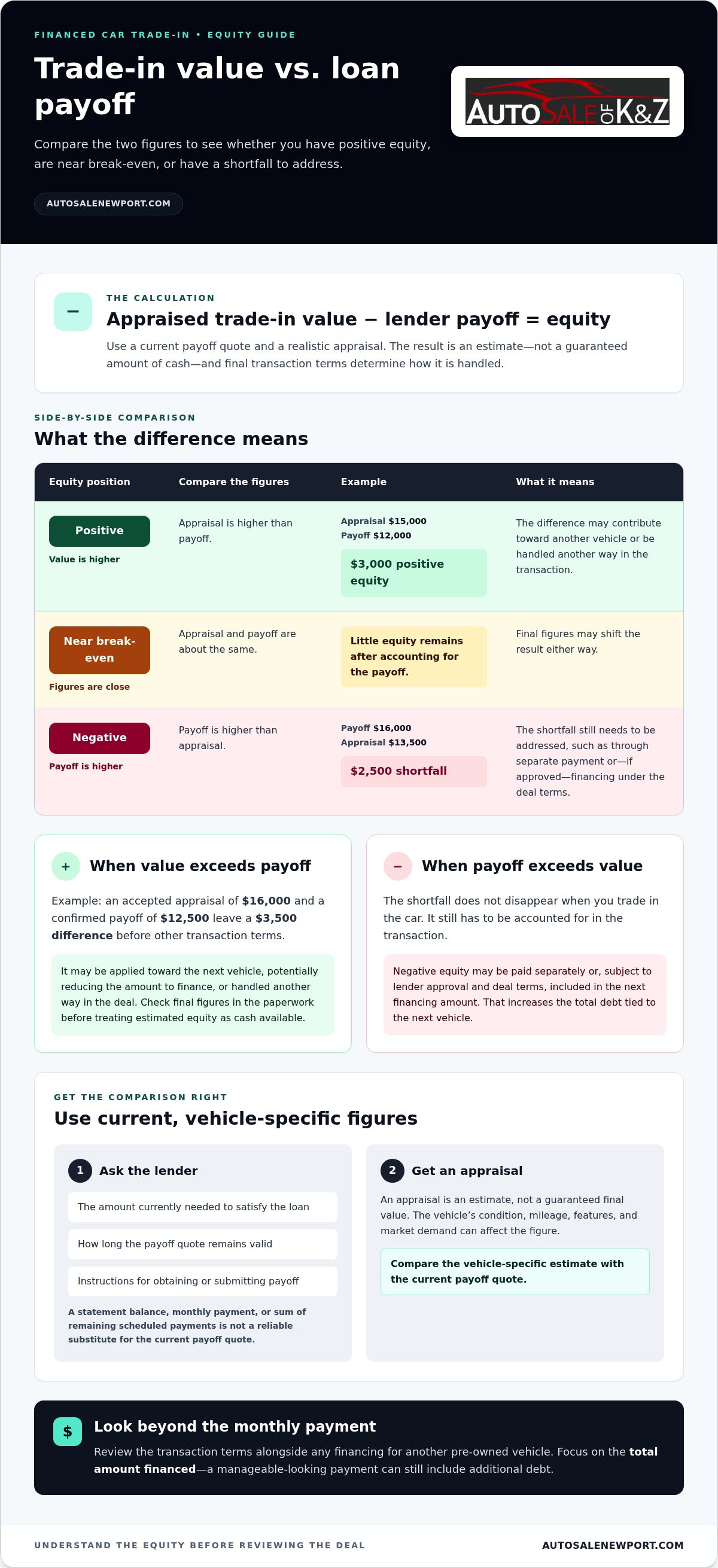
Use this equation: appraised trade-in value − lender payoff = equity. If an appraisal is $15,000 and the payoff is $12,000, the difference is $3,000 in positive equity. If the appraisal and payoff are about the same, you’re near break-even. If the payoff is higher than the appraisal, you have negative equity, and the difference still needs to be addressed.
Quotable takeaway: The difference between your car’s trade-in value and the lender’s payoff determines whether you have positive equity, break even, or face negative equity.
An appraisal is an estimate, not a guaranteed final value. Condition, mileage, features, and market demand can affect the figure. An on-site appraisal gives you a vehicle-specific estimate to compare with your payoff quote. When trading in a car that is not paid off, having both figures makes it easier to understand your options before reviewing a transaction.
Compare Your Trade-In Value With the Payoff: What Happens to Equity?
Once you have a current lender payoff and an appraisal, subtract the payoff from the trade-in value. The result is an estimate of your equity, not a guaranteed amount of cash. The final figures and transaction terms determine how any equity or shortfall is handled.
| Equity position | Comparison | What the difference means |
|---|---|---|
| Positive equity | Appraisal is higher than payoff | The difference may contribute toward another vehicle or be handled another way in the transaction. |
| Approximate break-even | Appraisal and payoff are close | Little equity remains after the loan payoff is accounted for; the final figures may shift the result either way. |
| Negative equity | Payoff is higher than appraisal | The shortfall still needs to be addressed, such as through separate payment or, if approved, financing under the deal terms. |
If the trade-in is worth more than the payoff
Say the accepted appraisal is $16,000 and the confirmed payoff is $12,500. The $3,500 difference is positive equity before any other transaction terms are considered. It may be applied toward the next vehicle, which could reduce the amount you need to finance, or handled another way in the deal. Check the final appraisal and payoff figures in the paperwork before treating estimated equity as cash available to you.
If the payoff is higher than the trade-in value
If the payoff is $16,000 and the appraisal is $13,500, there’s a $2,500 shortfall. Depending on your available funds and the lender’s terms, you may be able to pay the difference separately. In some transactions, negative equity may be included in the next financing amount, subject to lender approval and deal terms. That increases the total debt tied to the next vehicle.
Unpaid negative equity doesn’t disappear when you trade in the car; it still has to be accounted for in the transaction. Focus on the full amount financed, not just whether a proposed monthly payment fits your budget. A payment can look manageable while the total amount financed still includes more debt.
An on-site trade-in appraisal can help you compare the vehicle’s estimated value with the lender payoff before deciding how to proceed. This is useful when trading in a car that is not paid off and you want to understand the equity calculation before considering another vehicle.
How to Trade In a Financed Car in California Checklist
Trading in a car that is not paid off involves more than getting an appraisal. The lender’s payoff, the vehicle’s details, and its title status can all affect the next steps. Use this checklist to organize the information before deciding. The exact process may depend on your lender and how the transaction is structured.
- Request a current payoff quote. Contact your lender for the amount needed to satisfy the loan, the quote’s validity period, and any instructions for obtaining or submitting a payoff. Have the lender’s name, account details, and contact information ready.
- Gather vehicle details and records. Note the year, make, model, mileage, condition, and known equipment. Bring current registration, identification, and any available service or ownership records. Bring title documents if you have them; required paperwork can depend on title status.
- Obtain an appraisal. An appraisal gives you an estimated trade-in value to compare with the lender’s payoff. Describe the vehicle accurately, including its condition and any known issues.
- Compare the figures. Set the accepted appraisal beside the current payoff quote. Account for the difference when deciding whether to trade and, if applicable, finance another vehicle.
- Review the transaction paperwork. Before signing, check that the trade-in value, payoff details, and any remaining balance or equity are represented as agreed. Ask for an explanation of any figure you don’t understand.
What information should I gather before an appraisal?
Have the lender’s current payoff quote and contact details ready, along with your vehicle’s year, make, model, mileage, condition, and equipment. Bring identification and current registration. Service or ownership records can help describe the car’s history. Bring title documents if you have them; the exact paperwork needed may vary with title and lien status.
How do the lender, lien, and title fit into the process?
A lienholder may have an interest in the vehicle’s title while the loan remains outstanding. If you proceed with a trade, the lender and dealership may coordinate the payoff and related title handling, depending on the lender’s procedures, title status, and transaction structure. Don’t assume a specific timeline or paperwork path. Confirm the current requirements for your situation with the lender and follow applicable California DMV guidance.
Keeping the payoff quote, appraisal, and documents together makes it easier to review the numbers and understand what still needs to be handled before completing the trade.
Trade In, Sell Privately, or Pay Off First? Choose With the Numbers
There isn’t one best route for every owner. Compare all three options using the same current payoff quote and a realistic estimate of your vehicle’s value. This keeps the decision focused on your likely net position, rather than an appealing monthly payment or an unverified sale price.
- Trade in: The appraisal, trade, and next-vehicle shopping can be handled in one dealership transaction. Compare the accepted trade-in value with the payoff and see how any equity or shortfall affects the deal.
- Sell privately: You manage the listing, buyer communications, and sale arrangements. If there’s a lien, first confirm the payoff and title-transfer process with your lender so you understand how the loan will be satisfied and ownership transferred.
- Pay off first: Paying the loan before changing vehicles may simplify the ownership side, but only if you can manage the payoff. Compare the amount with your vehicle’s estimated value and available funds.
Negative equity deserves particular attention. If the payoff exceeds the vehicle’s value, calculate the exact shortfall and consider how it could affect your next financing before moving forward. Paying the difference separately may be an option if you have the funds and the lender’s terms allow it. If the shortfall is included in another loan, consider the total amount financed, not only the monthly payment.
When might a trade-in be the simpler route?
A trade-in can reduce the number of separate steps: you get an appraisal while considering another vehicle, and the existing payoff can be addressed as part of the transaction. That can be useful if you value convenience, but the appraisal figure still matters. Compare the accepted value with your payoff and review how both figures appear in the deal. If you’re still weighing your next vehicle, read Fullerton’s used-car buyer’s guide as part of your research.
When should I consider paying off or selling separately?
Paying off first may make sense if you have the funds and prefer to complete the loan before shopping for another vehicle. A private sale is a separate route, but it can involve coordinating with a buyer and lender around the payoff and title transfer. It may or may not leave you with a better net result. Compare a realistic sale value and the effort involved with the trade-in figure.
To compare your figures in one place, explore trade-in options with Auto Sale Newport. An appraisal alongside the lender payoff can clarify your choices before you decide whether trading in a car that is not paid off fits your plans.
Complete Your Fullerton Trade-In With Clear Numbers and Next Steps
A clear decision starts with the figures: confirm the lender payoff, compare it with the appraisal, calculate your equity or shortfall, then review the transaction terms. This sequence helps you see how the trade affects your next step before agreeing to the deal.
What should I review before signing?
Check that the written trade-in value matches the figure you agreed to and that the payoff reflects your lender’s current quote. Review how any positive equity or remaining shortfall appears in the paperwork. If a balance is included in new financing, make sure you understand the amount financed and repayment terms. Review the financing separately from the trade-in valuation so each part of the transaction is clear.
If you’re considering an electric vehicle as your next car, the used electric vehicle guide can help you think through what to evaluate while shopping.
How can a local appraisal help me decide?
An on-site appraisal provides a vehicle-specific estimate to compare with your lender payoff. Bring your current payoff information so you can review the two figures together. The appraisal is one part of the decision; the accepted trade-in value and final transaction terms determine how the numbers apply.
Auto Sale Newport offers trade-in valuations, on-site appraisals, and financing options for vehicle purchases. For Fullerton owners, the dealership at 1565 W Commonwealth Ave offers a local, in-person way to discuss an appraisal and compare it with the lender’s figure. You can review the numbers before deciding how to proceed.
Before completing a trade, confirm the payoff, compare the appraisal, calculate the equity, and read the written terms carefully. If you’re trading in a car that is not paid off, bring your lender information and take the time you need to understand the transaction. Get started with a Fullerton trade-in appraisal and review your numbers with Auto Sale Newport.
Make Your Next Move With the Numbers in Hand
Trading in a car that is not paid off can still be an option. Start with a current payoff quote, compare it with an appraisal, and calculate whether you have positive equity, are near break-even, or need to account for a shortfall. Then compare trading in, selling privately, or paying off the loan first using the same figures.
Before agreeing to a transaction, review the written trade-in value, payoff, any remaining balance, and financing terms. Understanding each number separately can help you make a confident decision about your current car and your next pre-owned vehicle.
Auto Sale Newport offers trade-in valuations and on-site appraisals in Fullerton, along with financing options for pre-owned vehicle purchases. Whether you’re researching from Fullerton, Orange County, Los Angeles, Riverside, Long Beach, Bakersfield, San Bernardino, Corona, San Diego, Anaheim, Bono Park, Santa Ana, or Orange, bring your lender payoff information and get a clearer picture of how the numbers fit together. Get a clear trade-in appraisal in Fullerton, then take your next step at a pace that feels right for you.
Frequently Asked Questions
Can you trade in a car that is not paid off?
Yes, you can trade in a financed car, but the existing lender payoff must be handled as part of the transaction. Compare a current payoff quote with the accepted trade-in value to understand whether you have equity or a shortfall. Approval, lien handling, and any remaining balance depend on your lender and the transaction terms. Trading in the vehicle doesn’t erase the outstanding debt.
What happens to negative equity when you trade in a car?
Negative equity means the payoff is greater than the vehicle’s accepted trade-in value. You may need to pay the difference separately or, if permitted and approved, include it in financing for another vehicle. Carrying the shortfall forward increases the amount financed. Review the written figures, including the total financed, rather than deciding based only on the monthly payment.
Can I trade in my car if the title is held by the lender?
A lender with an outstanding loan may have an interest in the vehicle’s title, but that doesn’t automatically prevent a trade-in. The payoff and title-release steps need to be coordinated, and the process can depend on the lender, title status, and transaction. Get current payoff details and verify which documents are needed for your situation, including any applicable California DMV paperwork.
Is it better to trade in a financed car or sell it privately?
Neither option is automatically better. A trade-in may simplify the process by combining the appraisal and vehicle purchase in one transaction. A private sale requires you to arrange the sale and coordinate payment, lender payoff, and title transfer with the buyer. Compare the same current payoff with realistic trade-in and private-sale values, then weigh the effort, timing, and any shortfall.
How do I calculate equity on a car that is not paid off?
Subtract the lender’s current payoff amount from the accepted trade-in value. A positive result indicates potential positive equity; a negative result means there’s a shortfall. Use a current payoff quote rather than the balance on a monthly statement, since the figures can differ. Treat the vehicle value as an appraisal estimate that may be affected by condition and market factors.
Do I need to keep making payments while my trade-in is being processed?
Don’t assume you can skip a payment while the trade-in payoff is pending. Your payment obligations follow your loan agreement until your lender confirms the loan is satisfied. Payoff and posting times can vary, so follow your lender’s instructions, keep transaction records, and verify the account is paid off before changing payment arrangements. If a due date is approaching, contact your lender for guidance.
What documents do I need to trade in a car with an outstanding loan?
Useful items commonly include identification, current registration, lender and account details, a current payoff quote, and available title or ownership records. You can also bring service records if you have them. Exact requirements depend on your lender, title status, and transaction. For an in-person appraisal in Fullerton, Auto Sale Newport provides trade-in valuations. Follow applicable California DMV paperwork requirements for your situation.


