

What if the best way to negotiate a used car price is to stop treating the conversation like a contest? A fair deal starts with evidence, not pressure. If you’re unsure what a car is worth locally or worry that fees and financing will muddy the numbers, learning how to negotiate used car prices can help you stay focused and in control.
It’s reasonable to feel awkward about making an offer, especially when you don’t know whether it’s fair. You don’t need an aggressive script or a perfect counteroffer. You need a defensible price range, vehicle-specific details to support your position, and time to review the full written offer before you decide.
This guide explains how to compare asking prices, use a car’s condition and history as evidence, and discuss the out-the-door total separately from financing or a trade-in. You’ll also learn what to review before signing and when it makes sense to pause or walk away. With a clear plan, negotiation can be a straightforward conversation about whether the complete deal works for you.
Key Takeaways
- Set a private spending limit before discussing a car, and research comparable listings to establish a reasonable price range.
- Use the vehicle’s condition and documented history to assess whether its asking price is supported by the evidence.
- To learn how to negotiate used car prices, prepare a calm, specific offer based on comparable vehicles and details about the car.
- Compare the vehicle price, trade-in value, financing terms, and itemized fees separately; a monthly payment alone won’t show the full cost.
- Before signing, check that the written offer matches what you discussed and pause if any figures or terms are unclear.
How to Negotiate Used Car Prices Starts Before You Visit the Dealership
Preparation makes a price conversation more factual and less stressful. Rather than trying to “win” a negotiation, you can ask informed questions and explain how you reached your offer. That’s the practical foundation of how to negotiate used car prices: know your budget, gather vehicle-specific evidence, and keep the discussion focused on the complete deal.
Start with several current listings for closely matched vehicles in Fullerton and nearby Orange County. The used car market includes different sales channels and pricing factors, so a single advertised car isn’t enough to establish value. Kelley Blue Book can offer a useful reference, but treat it as one comparison point, not a guaranteed transaction price.
For a quick overview of negotiation conversations, watch this video:
How do you research a used car’s market value?
Match the details as closely as possible: model year, trim, mileage, condition, vehicle history, and included equipment. Record those details beside each listing so you can spot meaningful differences. A vehicle with higher mileage or an inconsistent history may not be a fair comparison for one with lower mileage and documented records. If a listing leaves something unclear, note it as a question rather than assuming the cars are equivalent.
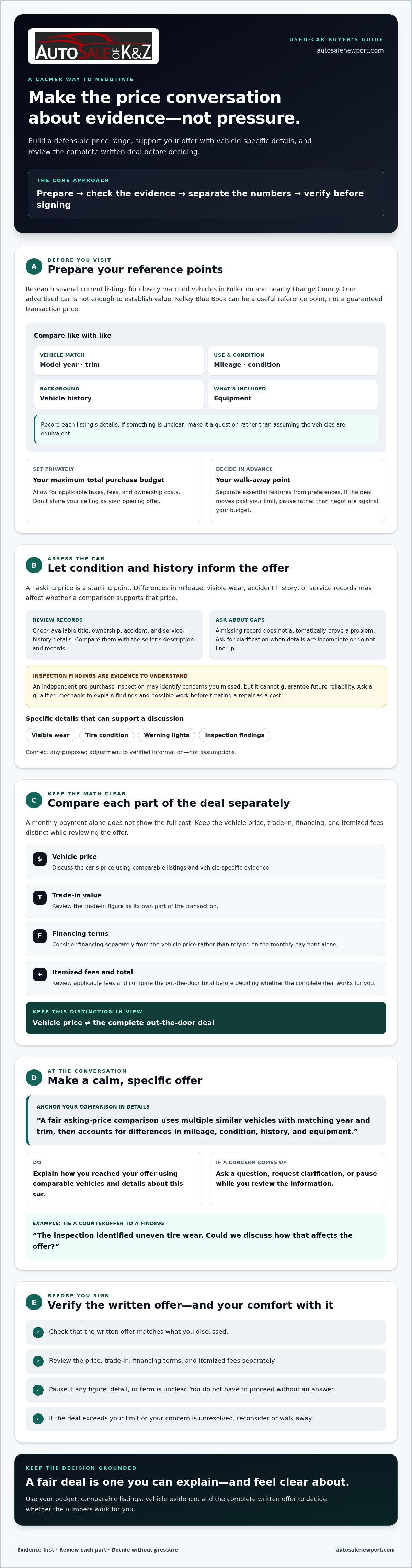
Fair comparison: “A fair asking-price comparison uses multiple similar vehicles with matching year and trim, then accounts for differences in mileage, condition, history, and equipment.”
What should you decide before contacting a seller?
Set a maximum total purchase budget privately before discussing a particular car or monthly payment. Allow for applicable taxes, fees, and ownership costs, and avoid sharing your ceiling as your opening offer. Decide which features are essential and which are preferences; liking a color or extra feature doesn’t automatically justify raising your offer.
Choose a walk-away point that fits both your budget and the comparisons you gathered. If the conversation moves beyond that limit, you can pause without turning the discussion into a confrontation. A simple note with your budget, comparable listings, and questions gives you a steady reference when the numbers start moving.
How Vehicle Condition and History Shape a Fair Used-Car Offer
An asking price is only a starting point. Two cars with the same year and trim may warrant different offers if one has more miles, visible wear, a documented accident, or incomplete service records. For buyers learning how to negotiate used car prices, the goal is to connect any proposed adjustment to evidence, not assumptions.
Review available vehicle-history information and ask about gaps or details that don’t line up. A missing record doesn’t automatically prove a problem, but it’s a reason to ask for clarification. An independent pre-purchase inspection can identify concerns you may not spot yourself. It can inform a decision, but it can’t guarantee future reliability.
Which inspection findings can support a counteroffer?
Be specific and factual. Note visible wear, tire condition, warning lights, or an issue identified during an inspection. Ask a qualified mechanic to explain what a finding means and what work may be involved. Then use verified information to discuss a price adjustment, ask whether the concern can be addressed, or reconsider the purchase. Avoid treating a possible repair as a certain cost until it’s been assessed.
A clear explanation keeps the conversation constructive: “The inspection identified uneven tire wear. Could we discuss how that affects the offer?” If the seller’s response doesn’t resolve your concern, you can pause rather than feel obliged to proceed. The Program on Negotiation at Harvard Law School outlines a successful negotiation framework that includes considering your alternative if you can’t reach an agreement.
How should you review a vehicle history report?
Check available title, ownership, accident, and service-history details through a reputable report. Compare what you find with the seller’s description and any records they provide. A clean report is useful context, not proof that the car has no issues; reports may not capture every event or concern. That’s why reviewing the car and arranging an independent inspection still matter.
If information is missing or inconsistent, ask a direct question before making or revising an offer. For example: “The report doesn’t show service records for this period. Are there documents that can help clarify the history?” The answer may add context, prompt further checking, or help you decide the vehicle isn’t the right fit.
Keep a simple record of the findings, the seller’s answers, and any inspection notes. That gives you a grounded basis for a counteroffer, a request to address a concern, or a decision to walk away. If you’re comparing options, you can also review Auto Sale Newport’s pre-owned vehicle inventory as one place to continue your research.
Used-Car Price, Trade-In, and Financing: Compare Each Part Separately
A deal can look appealing because one number seems favorable, while another part quietly changes the total. To keep the figures clear, ask for an itemized written quote and compare each component separately. This is a practical part of how to negotiate used car prices: focus on the vehicle’s price, not just the monthly payment or the apparent value of a trade-in.
- Vehicle price: The agreed price for the car before applicable taxes and fees.
- Trade-in allowance: The amount offered for your current vehicle, considered separately from the purchase price.
- Financing: APR, loan duration, required down payment, and total repayment information.
- Fees and taxes: Itemized charges, with any unclear or optional line items explained.
For Fullerton buyers, tax and registration details can depend on current state and local requirements. Verify the applicable figures for your transaction rather than relying on an old estimate. If a quote includes a charge you don’t understand, ask what it covers and whether it’s optional before evaluating the total.
Should you negotiate the trade-in separately?
Yes. Compare an independent estimate for your current vehicle with the dealership’s appraisal, then discuss the purchase price and trade-in allowance as separate figures. This makes it easier to see whether a strong trade-in offer is paired with a higher vehicle price, or vice versa. Once each number is clear, review the final written offer to judge the combined deal. For more context, see the Fullerton on-site appraisal guide.
How do you evaluate dealer financing alongside the price?
Compare financing offers using the same details: APR, loan duration, required down payment, and total repayment. A monthly payment by itself doesn’t reveal the full loan cost or whether the vehicle price is competitive. A longer term may lower the payment while increasing the time you’re paying, so don’t choose it for that reason alone.
Consider obtaining preapproval from an outside lender before visiting. It gives you another offer to compare, but review the terms side by side rather than comparing APR alone. Ask for the proposed financing terms in writing and check that they match the figures discussed. Then assess the price, trade-in, financing, and itemized charges together, without letting one favorable number distract from an unclear part of the deal.
What to Say When You Negotiate a Used-Car Price
A calm, prepared conversation doesn’t require a memorized sales script. Keep it simple: confirm the vehicle’s details, share relevant comparable listings, make a reasoned offer, and listen carefully to the response. This approach to how to negotiate used car prices keeps the discussion tied to the car and the evidence rather than pressure.
How do you make a confident first offer?
Be clear about which vehicle you mean and what supports your offer. For example: “I’m looking at this year and trim. I compared similar listings and considered this car’s mileage and condition. Would you be open to considering an offer of [your researched amount]?” Use an amount grounded in your research, not a figure chosen just to test the seller.
A strong offer connects comparable evidence with the specific vehicle’s condition, history, mileage, and included features. You might ask, “How does the asking price reflect those details?” That invites an explanation without turning the exchange into an argument.
If the seller counters, ask what supports the revised figure and request an itemized written breakdown of the complete offer. Check that the vehicle price, fees, trade-in, and financing terms match what you discussed. You can take time to compare the response with your notes; you don’t have to decide on the spot.
When should you pause or walk away?
Pause if the written terms differ from the conversation, a line item is unclear, or an important question remains unanswered. Ask for clarification before signing or agreeing to proceed. If the seller won’t explain the terms, or the complete deal exceeds your limit, it’s reasonable to walk away.
Don’t let a small price difference distract you from whether the car meets your needs or your inspection criteria. A respectful “I need time to review this” is enough. For broader local research before you continue the conversation, consult this Fullerton used-car deal guide.
Ready to compare vehicles in person? Explore available pre-owned vehicles and bring your questions and comparison notes along.
Before You Sign: Verify the Used-Car Deal and Choose Your Next Step
Before committing, compare the final paperwork with the terms you discussed. Even after careful research and negotiation, a changed figure or unexplained line can alter the deal. Take time to review everything, ask questions, and make sure the vehicle still meets your needs. A careful final check is the last step in how to negotiate used car prices with confidence.
What should you check on the final purchase paperwork?
Confirm that the documents identify the vehicle you inspected and show the agreed price, trade-in figures, financing terms, and itemized charges accurately. Check that any products or options you agreed to are described clearly, and look for unfamiliar or changed entries. If a figure doesn’t match your notes, ask for an explanation and a corrected version before proceeding.
- Match the vehicle identification details to the car you reviewed.
- Compare the price, trade-in amount, and financing terms with the negotiated figures.
- Review each listed charge and ask about anything unclear or unexpected.
- Keep copies of signed documents and supporting deal information.
Arrange a test drive and review the available vehicle documents before deciding. If questions about the car or the paperwork remain unresolved, pause. For California requirements that may apply to a specific purchase, check current official guidance or seek qualified advice rather than relying on assumptions.
How can Fullerton buyers continue their research?
Use the Fullerton used-car buyer’s guide to compare your choice with other options. You can also check Auto Sale Newport’s online inventory, then confirm whether a particular vehicle is available before making a trip. If you’d like to assess a trade-in, ask about an on-site appraisal; you can also discuss financing options and review the terms available for your situation.
A showroom visit can simply be a chance to look over a vehicle, take a test drive, and ask questions. Auto Sale Newport is located at 1565 W Commonwealth Ave in Fullerton. There’s no need to rush a decision: proceed when the car, documents, and complete offer make sense to you.
Take Your Research Into the Next Conversation
A confident purchase doesn’t depend on driving the hardest bargain. It comes from knowing your limit, grounding your offer in the specific vehicle, and checking that the written deal matches what you discussed. Those are the essentials of how to negotiate used car prices without turning a useful conversation into a confrontation.
Keep the full transaction in view, including the vehicle, trade-in, financing, and itemized charges. If a detail is unclear, ask for an explanation before you decide. Taking time to review the offer is part of making a choice that feels right for your budget and needs.
When you’re ready to explore options, Auto Sale Newport’s pre-owned inventory includes brands such as Toyota, Honda, Tesla, and Lexus, with current availability to be confirmed. Buyers can also ask about trade-in valuations, on-site appraisals, and financing options. Browse current inventory and plan a Fullerton test drive as a practical next step. Bring your questions, take the time you need, and move forward when the complete deal makes sense to you.
Frequently Asked Questions
Can you negotiate the price of a used car at a dealership?
Yes, a dealership may consider a different price, but there’s no guarantee it will accept a particular offer. Your case is strongest when you can explain it calmly using comparable vehicles and details about the car’s mileage, condition, and history. Treat the discussion as a chance to ask questions and review the terms, not a contest. If the numbers don’t work for you, you can pause or consider another vehicle.
How do you know what to offer for a used car?
Compare current listings for vehicles with similar year, trim, mileage, condition, and history, then use those details to set a reasonable range. For Fullerton and Orange County buyers, comparisons may include nearby listings in Anaheim, Buena Park, Santa Ana, and Orange. Buyers also comparing options in Los Angeles, Riverside, Long Beach, Bakersfield, San Bernardino, Corona, or San Diego should account for differences between individual vehicles rather than assuming local prices are identical.
Should you negotiate the car price or monthly payment?
Focus first on the vehicle price and the complete written offer, not just the monthly payment. A payment can change with the down payment, interest rate, or loan length, so it doesn’t show by itself whether the car price or financing terms are competitive. Compare financing using the APR, loan duration, required down payment, and total repayment. Once those figures are clear, decide whether the payment fits your budget.
Can you negotiate a used car price after a test drive?
Yes. A test drive can help you assess whether the vehicle suits you and may give you specific questions to raise before making an offer. If you notice a concern, describe what you observed and ask for clarification. You can also consider an independent inspection before deciding. Use confirmed information to support a revised offer, request further discussion, or decide the car isn’t the right fit.
Should you negotiate a trade-in and a used car purchase separately?
Yes. Discuss the used car’s price and your trade-in allowance as separate figures so you can evaluate each one clearly. Compare the trade-in appraisal with an independent estimate, then review the final written offer to understand how the figures work together. Auto Sale Newport offers trade-in valuations and on-site appraisals in Fullerton. Ask for the terms in writing before deciding whether the combined deal meets your needs.
What should you do if a dealer will not negotiate?
Ask whether the seller can explain the asking price and provide a written breakdown of the full offer. If the price or terms remain unchanged, compare the vehicle and complete deal with other options rather than arguing. You can pause, revisit your budget and research, or walk away if the terms don’t work for you. A clear, respectful conversation is useful, but you’re not obligated to accept an offer.
Is the out-the-door price more important than the asking price?
The out-the-door total is essential for judging what you’ll pay because it includes the vehicle price along with applicable taxes and itemized fees. The asking price still matters as a comparison point, but it doesn’t show the full transaction on its own. Request the total in writing and ask about any unclear or optional charges. For a Fullerton purchase, verify current tax and registration details rather than relying on an old estimate.


