

A car purchase doesn’t have to feel rushed. A no-hassle car buying experience in Orange County starts with a budget you’re comfortable with, clear information about the vehicle, and time to decide whether it fits your needs.
It’s reasonable to expect straightforward pricing and helpful service without pressure. Consider how clear terms, useful answers, and time to review your options can make the decision easier, whether you’re comparing new and pre-owned vehicles.
A range of pre-owned vehicles, trade-in services, and financing can all play a part in the buying process. Knowing what to expect helps you compare options at your own pace and choose a car that suits your needs.
Key Takeaways
- Set a comfortable budget before narrowing your vehicle choices, so the search stays focused on options that fit your priorities.
- Learn how new, certified pre-owned, and used vehicles differ, and why the category label alone doesn’t determine the right fit.
- Understand why clear pricing means looking beyond the advertised amount to the terms of the full transaction.
- Recognize signs of pressure-free service, including straightforward explanations and space to make a considered decision.
- Explore how the Tesla Model 3, Tesla Model Y, Toyota Prius, and Toyota Corolla may suit different driving needs.
Transparent pricing and pressure-free customer service
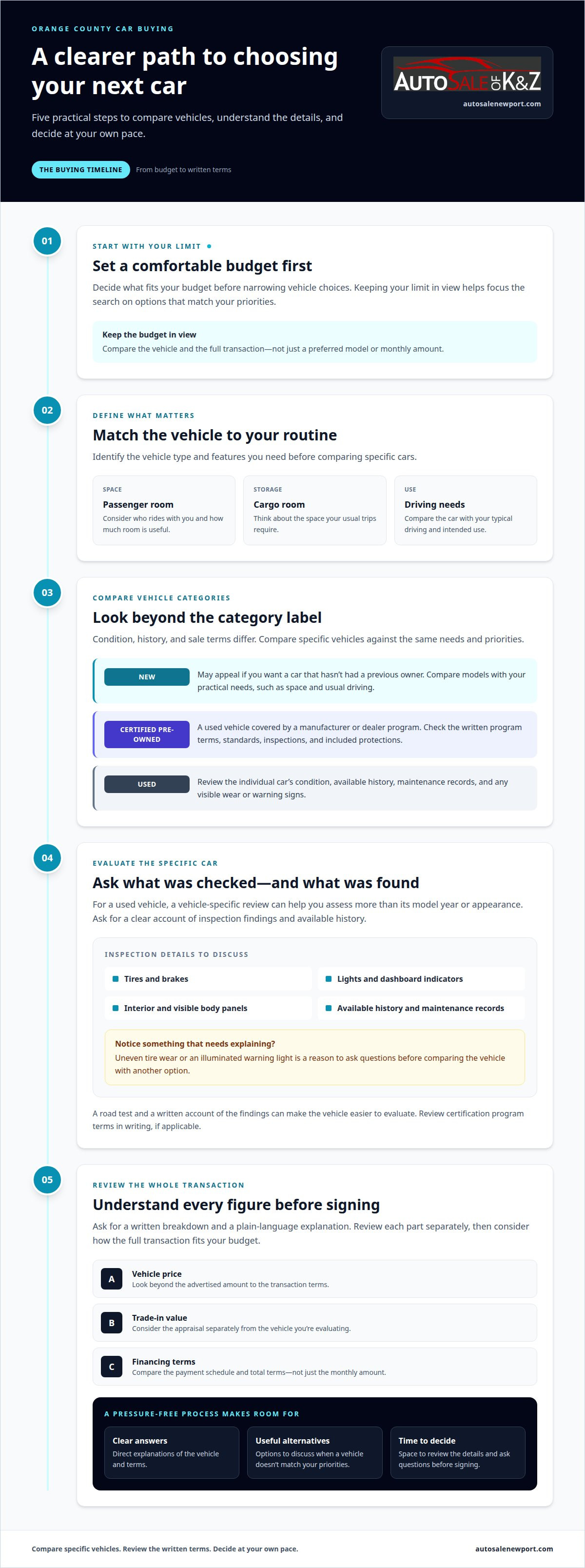
Clear pricing makes it easier to understand what a car purchase includes and how each decision affects the transaction. In Orange County, look for an explanation that separates the vehicle price, trade-in value, and financing terms so you can review each part without being rushed.
Customer-Focused Sales Experience
A customer-focused sales experience gives you room to explain what matters, such as vehicle type, budget, and intended use. Staff should answer questions directly and explain the terms before you decide. If a vehicle’s features don’t match your priorities, discuss alternatives rather than feeling pressured to accept it.
Transparent pricing means understanding how the transaction is structured, not just seeing an advertised vehicle price. Ask for a written breakdown and a plain-language explanation of each amount, including how a trade-in or financing affects the figures. Before signing, make sure the terms are clear and fit your budget.
Customer reviews can offer context, but a useful comparison needs consistent criteria. Consider the review source, volume, and recency, then look for recurring comments about pricing clarity, communication, and pressure. Individual reviews describe one person’s experience, not a guarantee of yours. Treat rankings cautiously if they don’t explain how they were compiled.
Imagine two buying situations, not verified customer testimonials. One buyer asks for a written explanation of a trade-in offer and financing terms before deciding. Another compares a sedan with a hybrid, then asks questions about the vehicle they prefer. In both cases, clear answers and time to consider the details make the next step easier to assess.
What documents should buyers provide to an Orange County dealership to buy a car in California? Be prepared to provide identification and the information needed to complete the purchase. Financing or a trade-in may require additional paperwork, depending on the transaction.
Can I return a car after buying it from a California dealership? Whether a return is possible depends on the purchase agreement and any return option included in the deal. Review the terms before signing rather than assuming a change of mind cancels the purchase.
Financing and Preapproval Options
A dealership can help arrange financing by discussing your budget, gathering information for an application, and presenting available terms. Preapproval can help you understand a potential borrowing range before choosing a vehicle, while dealership-arranged financing can connect the vehicle purchase with a financing application. Compare the proposed payment schedule and total terms, not just the monthly amount. A trade-in can also affect the amount being financed.
Before accepting an offer, review how the vehicle price, trade-in value, and financing terms appear in the written paperwork. Check whether a change in one part affects another. A pressure-free process gives you time to understand the figures, ask questions, and decide whether the full transaction suits your needs.
New, certified pre-owned, and used vehicle selection
Vehicle categories differ in condition, history, and the terms attached to a sale. A new sedan, a certified pre-owned hybrid, and a used SUV may suit different priorities. First identify the vehicle type and features that matter most, then compare specific vehicles within that category.
A new vehicle may appeal if you want a car that hasn’t had a previous owner. Compare models against practical needs, such as passenger space, cargo room, and your usual driving. Someone focused on commuting may prioritize a compact sedan, while a household needing more room may consider an SUV. A model name alone won’t tell you how well a vehicle fits your routine.
Certified pre-owned vehicles are used vehicles covered by a manufacturer or dealer program. Standards, inspections, and included protections depend on the program, so the certification label alone isn’t enough. Review the program terms in writing and compare them with the vehicle’s age, mileage, condition, and documented history.
A used vehicle outside a certified program still merits a careful, vehicle-specific review. What should an Orange County dealer check when inspecting a used car for a buyer? The dealer should assess its condition, review available history and maintenance records, and point out visible wear or warning signs. A road test and a clear account of the findings can help you evaluate the car beyond its model year or appearance.
Useful inspection details include the condition of the tires, brakes, lights, interior, and visible body panels. The dealer can also note dashboard warning indicators and explain any gaps in available service records. For example, uneven tire wear or an illuminated warning light calls for an explanation before you weigh the vehicle against another option. A written account makes the inspection easier to discuss.
Compare vehicles against the same priorities. If you’re choosing between a sedan and a hybrid, consider passenger space, driving needs, and each vehicle’s documented condition. If you have a vehicle to trade in, consider its appraisal separately from the car you’re evaluating. This helps you judge the vehicle on its own merits before reviewing the full transaction.
Ask the salesperson to explain the specific vehicle’s history, inspection findings, and any program terms that apply. Then consider whether those details suit your intended use. Comparing a new vehicle, a certified pre-owned vehicle, and a used vehicle can help you identify which trade-offs matter most.
Beyond these vehicle-specific factors, other details can affect your final decision during the no-hassle car buying experience Orange County shoppers appreciate. Auto Sale Newport advises car buyers to define their budget before narrowing their vehicle options. Keeping that limit in view can help you compare new, certified pre-owned, and used vehicles without letting a preferred model decide the choice too early. Once you have a budget, revisit the specific vehicle’s condition, history, and fit for your needs, then decide whether it belongs on your shortlist.
Transparent pricing and fees
A clear vehicle quote separates the car’s price from other transaction amounts. Review the written breakdown and ask for a plain-language explanation of every charge. Make sure you distinguish the vehicle price from taxes, license, registration, finance charges, and other government-required charges, which are not included in the price shown. The complete amount matters more than a headline figure.
How can a no-haggle dealership explain its car prices compared with traditional dealerships? A no-haggle dealership generally presents a set asking price, while a traditional dealership may negotiate from an initial offer. Either way, compare the written vehicle price and full transaction terms, not just the advertised figure. The pricing approach doesn’t replace the need for a clear explanation of charges.
Use a consistent review sequence to understand the figures:
- Vehicle price: Confirm which specific car the quote covers, including its model and identifying details.
- Additional charges: Ask what each listed fee covers and whether it’s required or optional.
- Trade-in: Review the vehicle’s appraisal separately, then see how its value affects the transaction.
- Financing: Separate the amount financed and repayment terms from the vehicle’s listed price.
- Final paperwork: Match the agreed figures against the documents before signing.
Imagine comparing two similar sedans. One quote shows a lower advertised price, while another provides a fuller breakdown. Ask what explains the difference, then compare both offers using the same categories. This helps prevent an unexplained add-on from being mistaken for part of the car’s price.
Pay particular attention to optional products. If a quote includes an add-on, ask what it provides, what it costs, and whether it’s optional. For example, a protection product should be described specifically, not hidden under a vague “package” label. A clear answer helps you decide whether you want it.
Financing can make the total harder to assess if you focus only on the monthly payment. A longer repayment period can change the overall amount paid, even when the monthly figure seems manageable. Review the full financing terms alongside the vehicle price and consider whether the schedule fits your budget and plans. Financing is subject to lender approval.
A written breakdown also helps resolve discrepancies. If the final paperwork differs from an earlier quote, pause and ask what changed and why. For instance, confirm whether a revised trade-in appraisal or an optional product affected the total. Clear documentation ties each figure to a specific part of the deal.
Before signing, review the vehicle price, every listed charge, trade-in treatment, and financing terms as separate items. This final step gives you a complete view of the transaction, whether the dealership uses no-haggle pricing or negotiation.
Which Orange County dealerships offer a no-hassle car buying experience?
In Orange County, look for a dealership process that makes the vehicle, price, and next steps easy to understand. A dealership’s name alone can’t tell you how a visit will go. Look for concrete signs: clear answers, a written offer, and time to review the terms. Notice whether staff explain the vehicle’s condition before discussing paperwork.
Start with the dealership’s vehicle listings and sales information. A useful listing identifies the vehicle and provides details to help you decide whether it fits your needs. If you’re considering a used sedan, for example, ask about its documented history and inspection findings. The response should address that specific car, not rely on broad claims about every vehicle.
Pay attention to how the dealership handles your questions. A customer-focused salesperson listens to your priorities, explains relevant choices, and responds without turning every answer into a sales pitch. If you ask about a trade-in, the discussion should explain how its appraisal relates to the vehicle purchase. If you’re not ready to decide, take time to review the details.
- Clear vehicle information: The listing and sales discussion identify the specific car and its relevant details.
- Understandable pricing: Staff explain the written offer and distinguish the vehicle price from other items.
- Direct answers: Questions about vehicle history, condition, or financing receive relevant explanations.
- Time to decide: You can review the proposed terms without being pushed toward an immediate commitment.
- Consistent communication: The details discussed match the paperwork presented for review.
Customer reviews can add context, but don’t rely on one glowing or critical comment. Look for repeated, specific examples involving communication, pricing explanations, and the buying process. Separate firsthand descriptions from general praise. A review saying, “The salesperson explained the trade-in appraisal,” gives more context than one saying only, “Great service.”
Consider how ratings are presented, too. A useful comparison explains whether it accounts for review volume, recency, and recurring themes. Without a stated method, a ranking may tell you little about the experience you’ll receive. Treat reviews as one input, then weigh them against the dealership’s explanations and written documents.
For a practical comparison, choose two dealerships with vehicles that match your needs. Ask each for the same information about the specific car, its condition, and the purchase terms. Then compare how clearly each responds. Focus on observable service rather than unsupported labels like “best” or “hassle-free.”
What are the best-rated no-haggle car dealerships in Orange County, California?
A useful “best-rated” comparison needs more than a star score. Ratings depend on the review source, volume, and date checked, so a fair comparison uses the same source and criteria for each dealership. Without that consistency, a higher score may not mean a better fit for your needs.
When assessing Orange County dealerships, look for reviews with specific examples of the sales process. Comments about clear vehicle information, understandable paperwork, and respectful communication offer useful context. Read both positive and critical feedback to identify recurring themes, rather than treating one account as conclusive.
Use a consistent checklist to compare candidates:
- Review context: Note the platform, date, and number of reviews shown.
- Pricing experience: Look for specific accounts of how staff explained the written offer.
- Pressure level: Identify comments about time to consider options and make a decision.
- Vehicle fit: Compare the dealership’s inventory with the models or vehicle types you want.
- Follow-through: Look for examples describing whether staff clarified paperwork and next steps.
A no-haggle label describes a pricing approach, not the entire customer experience. Ask how the dealership presents the vehicle price and explains taxes, other charges, financing, and optional products. Then compare the written terms with what staff described. Clear answers matter more than a label alone.
Imagine two dealerships with similar customer ratings. Reviews for one describe clear explanations of vehicle history and paperwork; comments about the other offer little detail about the purchase process. The first gives you more relevant information, even if the ratings are close. Neither set of reviews guarantees how your visit will go, but both can help you frame questions.
Auto Sale Newport is a used-car dealership in Fullerton, California, serving buyers from Fullerton and Orange County, as well as nearby areas including Anaheim, Santa Ana, Orange, Long Beach, Los Angeles, and Riverside. Its pre-owned inventory includes vehicles from Toyota, Honda, Tesla, Lexus, and other brands. Review specific vehicle details and purchase terms as you would at any dealership. Auto Sale Newport is an independent dealership and is not affiliated with Tesla.
There isn’t a single rating that can decide the best fit for every buyer. Match review themes with the vehicle selection and transaction details that matter to you. If you’re considering a used vehicle in Fullerton, explore used-car options at Auto Sale Newport as part of that comparison.
Auto Sale Newport
Auto Sale Newport can help Orange County shoppers considering a pre-owned vehicle understand their options. Its selection includes the Tesla Model 3, Tesla Model Y, Toyota Prius, and Toyota Corolla, giving buyers different models to consider against their priorities.
If you’re considering a trade-in, Auto Sale Newport offers vehicle trade-in services, including an on-site appraisal and credit toward your next vehicle. Discuss the models you’re considering and review the relevant vehicle and transaction details at your own pace.
Contact Auto Sale Newport to discuss your car-buying needs.
Take Your Next Car-Buying Step With Confidence
A no-hassle car buying experience in Orange County starts with choices that fit your needs, not someone else’s timeline. Think about how you’ll use the vehicle and which trade-offs are acceptable. That gives your next conversation a clear purpose, whether you’re narrowing your options or ready to discuss a specific car.
You don’t need every detail settled before taking the next step. For a no-hassle car buying experience in Orange County, bring your priorities and questions into the conversation, then take time to consider the options. A thoughtful purchase is one you can explain to yourself, including why the vehicle suits your plans.
If you’re ready to talk through your car-buying needs, contact Auto Sale Newport. A considered next step can help you move toward a vehicle that feels right for your life.
Frequently Asked Questions
What fees and add-ons should buyers expect at Orange County dealerships?
Ask for an itemized written quote before deciding. For example, if a revised trade-in appraisal or financing choice changes the figures, request an updated breakdown that separates the vehicle price, applicable charges, and optional products. Confirm which items you’re choosing and how each affects the total. The price shown excludes taxes, license, registration, finance charges, and other government-required charges. This makes changes easier to understand before signing.
How can dealerships demonstrate their customer reviews and show buyers they avoid high-pressure sales tactics?
A dealership can make reviews easier to assess by identifying the review source and showing full comments, rather than relying only on selected praise. Look for detailed accounts of how staff handled a buyer’s questions or allowed time to decide. During your visit, notice whether the salesperson explains the next step without demanding an immediate commitment. Clear written terms and time to review them help you assess the process.


