

A cash offer can be based on your car alone, even if you aren’t buying another vehicle. Dealerships that buy cars outright in Anaheim assess details such as condition, mileage, history, and resale potential before making an offer. The amount depends on the vehicle and the appraisal, not on a trade-in toward another car.
Selling directly can feel simpler than arranging a private sale, but it’s reasonable to want a clear explanation of how the offer is determined and what happens at payment. A useful appraisal explains the factors behind the figure and helps you decide whether the sale fits your plans.
This guide explains how online estimates compare with in-person appraisals, which vehicle details can affect value, and how dealerships assess cars in different conditions. You’ll also learn what to expect from the offer and payment process, so you can approach a sale with a clearer sense of each step.
Key Takeaways
- Use an online appraisal as an initial estimate, then compare it with an in-person assessment of the car’s actual condition and details.
- Prepare accurate information about your vehicle so its mileage, history, condition, and resale potential can be considered in the valuation.
- Damage or mechanical issues can affect an offer, but a car’s condition is only one part of the appraisal.
- Before accepting an offer, understand the payment process and when funds will be provided.
- A phone quote can help you start the conversation, while an in-person appraisal can account for details that are difficult to assess remotely.
Online appraisal and in-person vehicle appraisal
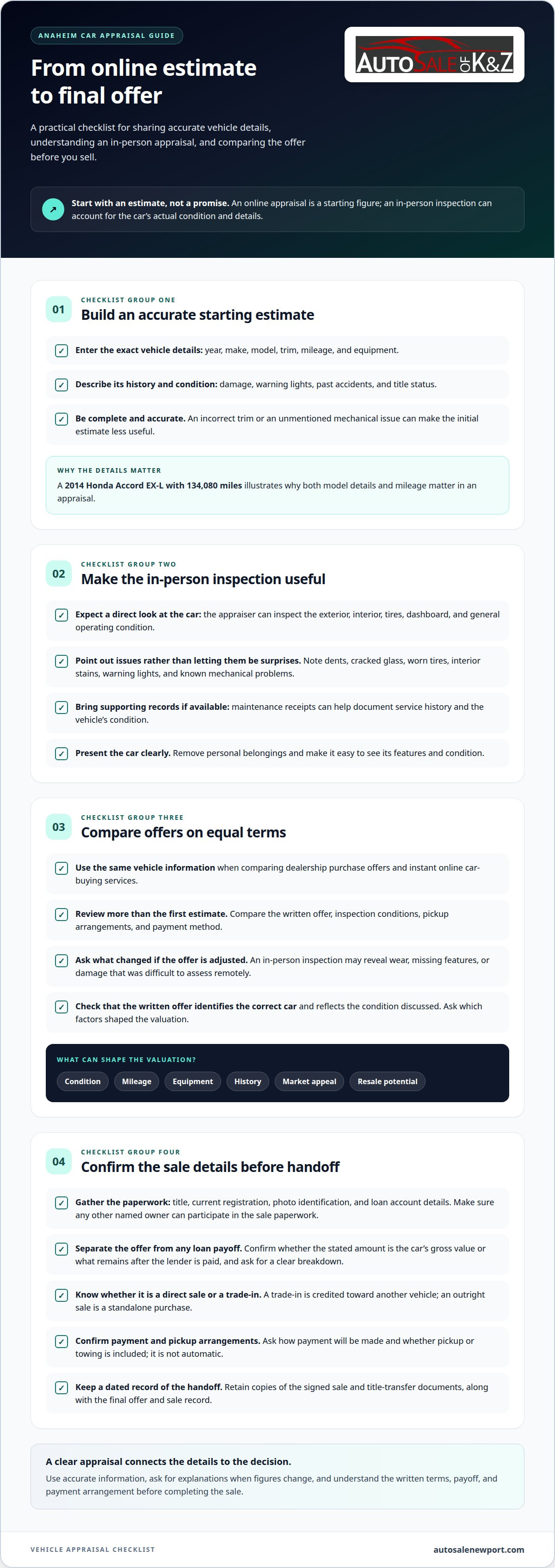
An online appraisal provides a starting estimate; an in-person inspection evaluates the car itself. For a useful estimate, enter the correct year, make, model, trim, mileage, and equipment. Describe damage, warning lights, past accidents, and title status accurately. An incorrect trim or unmentioned mechanical issue can make the initial estimate less useful when the dealership sees the vehicle.
Use the same vehicle details when comparing dealership purchase offers with instant online car-buying services near Anaheim. Compare the written offer, inspection conditions, pickup arrangements, and payment method, not just the first estimate shown online. A remote estimate may change after inspection, when the appraiser can see wear, missing features, or damage firsthand. Ask for an explanation of any adjustment before deciding.
In person, the appraiser can inspect the exterior, interior, tires, dashboard, and general operating condition. Bring maintenance records if available, and point out issues rather than letting an inspection uncover surprises. The value reflects the vehicle’s condition and resale potential, so a clean presentation helps the appraiser assess it accurately. A 2014 Honda Accord EX-L with 134,080 miles illustrates why both model details and mileage matter.
Gather the title, current registration, photo identification, and loan account details before the appointment. These documents help identify the vehicle, establish who can sign, and clarify whether a lender has an interest in it. If another owner is named on the title, make sure they can participate in completing the sale paperwork. Keep a copy of the signed documents and sale record.
At handoff, complete the title-transfer paperwork with the dealership and keep a dated record of the sale. Ownership paperwork and liability reporting are related but separate steps; retain copies showing when the vehicle changed hands and when transfer documents were submitted. If there’s an existing loan, the payoff amount affects what remains after the lender is paid. Ask for a clear breakdown of the offer, payoff, and any remaining balance.
Applying trade-in value toward another vehicle differs from selling outright: the value is credited toward the next purchase rather than paid as a standalone sale. If you sell without buying, compare the offer with the amount owed, if any, and confirm how payment will be arranged. A private sale may leave a buyer responsible for tax on the full $50,000 replacement-vehicle price, even when sale proceeds fund a down payment. Pickup or towing also isn’t automatic; include the arrangement and any responsibility for its cost in the written terms.
Getting a trade-in value
A trade-in value estimates what a dealership may offer for your vehicle toward another purchase. The figure depends on the vehicle’s market appeal, condition, mileage, equipment, history, and demand. Start by recording the exact year, make, model, trim, and odometer reading. A Toyota Corolla with a different trim or accident history may receive a different valuation, even if its model year matches another car.
How can I get the best cash offer when selling my car to an Anaheim dealership? Provide complete, accurate details, clean the vehicle, and bring service records that support its condition. Compare written offers based on the same vehicle information, then ask how mileage, damage, or missing equipment affected each appraisal.
Condition matters because the dealership considers the work and preparation needed before resale. Note dents, cracked glass, worn tires, interior stains, warning lights, and known mechanical issues. Don’t hide a problem or say a repair was completed without records. Clear details help the appraiser distinguish normal wear from damage that may affect the offer.
Gather maintenance receipts, ownership documents, and information about installed features before requesting a valuation. Receipts can document service history, while details such as a factory navigation system or upgraded trim help identify the vehicle accurately. Remove personal belongings and present the car cleanly, with clear access for inspection. These steps won’t change the vehicle’s history, but they can make its features and condition easier to evaluate.
Keep trade-in value separate from the price of another vehicle. A dealership may show both figures in a purchase discussion, but the trade-in amount is the value assigned to your current car. Review the offer on its own before considering how it affects your next purchase. If you’re selling without buying another vehicle, ask for a direct purchase offer rather than a trade-in credit.
When reviewing a written offer, check that it identifies the correct vehicle and reflects the condition discussed. Ask which factors shaped the valuation, such as mileage, equipment, service records, or visible damage. If an in-person inspection changes an earlier estimate, request a clear explanation. This gives you a practical basis for comparing offers instead of relying on a headline figure alone.
Before accepting, confirm whether the stated amount is the vehicle’s gross value or what remains after any loan payoff. For example, if the car has an outstanding loan, consider the lender’s payoff amount separately. Keep the offer, inspection notes, and final sale paperwork together. A written record makes it easier to follow how the appraisal became the final transaction amount.
Offers for cars in any condition
A car doesn’t need to be in showroom condition to be considered for purchase. Dealerships assess its current state, likely resale options, and the work needed before another buyer can use it. A vehicle with a dented door may still be appraised, while a car that won’t start requires a different inspection plan. Describe the car’s condition clearly when arranging an appraisal.
Describe damage by its location and effect. For example, note whether a cracked windshield affects visibility, whether a warning light stays on, and whether the engine starts. Mention missing keys, flat tires, or flood damage if relevant. These details help the appraiser prepare for the vehicle’s actual condition instead of relying on an incomplete description.
Mechanical problems and cosmetic wear can affect an offer in different ways. A scratched bumper may affect appearance, while a transmission issue can affect whether the car runs and how it can be resold. A dealership may consider repair needs, parts demand, and the vehicle’s make and model. The inspection connects these factors to the car’s potential value.
For a non-running vehicle, explain where it’s parked and whether it can be accessed safely. Don’t assume an offer includes towing or pickup. Clarify how the dealership will inspect and move the car, and whether those arrangements affect the transaction terms. A vehicle with extensive damage may also need a more detailed assessment than one with ordinary wear.
What are the addresses and hours of Anaheim dealerships that purchase cars directly? Each dealership has its own location and operating schedule, so there isn’t one shared address or set of hours. Before traveling, confirm the location and hours of the specific dealership you plan to visit.
Prepare a short condition summary before requesting an offer. Include the model, mileage, title status, known damage, and whether the car starts and drives. Add clear photos of exterior damage or interior wear when requesting an online estimate. An in-person review can then focus on details that affect the appraisal instead of correcting basic information.
Ask how the offer accounts for damage, repairs, and resale options. If the appraiser changes an initial estimate after seeing the vehicle, request the specific reason, such as an undisclosed mechanical issue or additional body damage. Review the written offer and any stated conditions before accepting. This makes it easier to understand how the car’s current condition shaped the proposed purchase.
Payment timing
Payment timing depends on when the dealership completes its inspection, sale paperwork, and any lender payoff. Treat the appraisal, signed agreement, and payment as separate steps. Before handing over the keys, ask what must happen before funds are released and which payment method the dealership will use. A written explanation helps you understand the sequence.
Start by reviewing the final purchase agreement. Confirm that it identifies the correct vehicle, states the agreed purchase amount, and shows any loan payoff or other adjustment. If the figure differs from the earlier offer, ask which inspection finding or transaction detail changed it. Keep a copy of the signed agreement with your payment record.
If your car has an outstanding loan, the lender’s payoff process can affect the transaction timeline. The dealership needs the lender’s payoff information to determine how the sale proceeds are applied. Ask how the lender will be paid, how any remaining equity will be delivered, and what happens if the offer doesn’t cover the payoff. Keep the lender’s account details available.
For a car without a loan, confirm that the title and ownership documents are ready for the sale. Missing paperwork, a title issue, or an unavailable co-owner can delay completion because the dealership must resolve ownership details. Bring identification and documents related to the vehicle. If another person is named on the title, arrange for their participation before signing.
Ask whether payment is issued at signing or after a specific transaction step. A paper check and an electronic transfer follow different delivery processes, so confirm the method, recipient, and expected processing sequence. Don’t assume that signing an agreement means the funds are already available in your account. Request a receipt showing the payment amount and date.
Before leaving, compare the payment documentation with the final agreement. Check the seller’s name, vehicle identification, purchase amount, and any deductions. If the dealership pays a lender directly, keep the payoff documentation with your sale records. If the sale proceeds exceed the payoff, confirm how the remaining amount will reach you and where it appears on the paperwork.
A simple handoff checklist can prevent avoidable confusion:
- Review the final amount and any payoff adjustment.
- Confirm the payment method and recipient.
- Keep copies of the signed agreement and receipt.
- Ask for the next step if a lender payment is involved.
These steps help you track payment from the final appraisal through the completed sale. Understand each transaction stage before signing, especially if a lender or missing ownership document affects the handoff.
Phone quotes and on-the-spot offers
A phone quote gives you an initial estimate based on the details you provide. An on-the-spot offer follows an in-person review of the vehicle and its paperwork.
Phone Quote Process
Before calling, write down the vehicle’s year, make, model, trim, mileage, and title status. Describe damage, warning lights, missing features, and whether it starts and drives. The person preparing a quote uses these details to assess the car remotely. Ask which assumptions shape the estimate, then record the amount and any conditions attached to it.
On-the-Spot Offers
An on-the-spot offer is made after a dealership representative inspects the vehicle in person. The review can account for details that are difficult to explain by phone, such as worn tires, body damage, or interior condition. Compare the written offer with your description and ask what changed if it differs from the earlier quote.
Make the phone conversation useful by separating known facts from estimates. For example, provide the odometer reading shown on the dashboard rather than rounding it. If you don’t know the repair history, say so instead of guessing. Specific answers help the appraiser distinguish verified details from assumptions and explain how each affects the estimate.
Keep notes during the call. Record the vehicle details you provided, the quoted amount, the date, and any stated conditions. If you contact more than one dealership, use the same information each time. That makes comparisons fairer and helps you spot differences in how each estimate was determined.
Before accepting an in-person offer, review the purchase paperwork line by line. Confirm that it lists the correct vehicle and agreed amount. Check for changes related to inspection findings, an existing loan, or ownership documents. Ask for the reason behind any adjustment, and make sure the final terms reflect your discussion before signing.
A useful comparison looks beyond the headline figure. Consider whether each quote assumes the car starts, has a clear title, or has damage that wasn’t discussed. Then compare the final written offers on matching terms. A phone estimate and an inspected offer serve different purposes, so treat the first as a starting point, not a completed transaction.
Have your vehicle details and questions ready before calling, then use the in-person review to resolve any remaining differences. This two-step approach helps you understand how an estimate becomes a purchase offer without confusing a preliminary quote with final paperwork.
Auto Sale Newport: Tesla Model 3
Auto Sale Newport offers a Tesla Model 3 and vehicle trade-in services for drivers considering a different car. If you’re comparing an outright sale with applying your car’s value toward another vehicle, a trade-in appraisal can help clarify that option. The value depends on your vehicle’s details and condition, so bring accurate information when discussing your trade-in.
A Tesla Model 3 may be relevant if you’re exploring a pre-owned electric vehicle after selling or trading your current car. Consider your priorities first, then compare the available vehicle option with your plans for the sale proceeds. This keeps the next step grounded in your needs, rather than assuming a trade-in is the right fit.
Contact Auto Sale Newport or visit autosalenewport.com to discuss your next step.
Choose a Next Step That Fits Your Plans
Selling a car is also a chance to decide what comes next, whether that means moving on without another vehicle or considering a trade-in. If you’re comparing dealerships that buy cars outright in Anaheim, keep your goal clear: a direct sale and a trade-in serve different needs. Start the conversation with the outcome you want, not simply the first figure presented.
If replacing your vehicle is part of the plan, Auto Sale Newport offers a Tesla Model 3, Tesla Model Y, and Toyota Prius. Those options may help you explore a next vehicle while considering your current car’s trade-in value. You can discuss the trade-in process and how it relates to the vehicle you’re considering, then decide whether that route suits your plans.
There’s no need to rush the decision. Bring your questions, explain what you hope to do with your current vehicle, and take time to understand the available next step. Contact Auto Sale Newport today to start a clear, practical conversation about your options.
Frequently Asked Questions
Which dealerships in Anaheim, CA buy cars outright without requiring a trade-in?
Ask each dealership whether its offer is a direct purchase or a trade-in credit, since these are different transactions. For Anaheim drivers comparing dealerships that buy cars outright, get the offer’s terms in writing and check whether buying another vehicle is required. Auto Sale Newport provides trade-in valuations and on-site appraisals, which can help if you’re considering applying your current car’s value toward another vehicle.
How do Anaheim car dealerships determine an outright purchase offer?
Dealerships typically base an offer on the vehicle’s identifying details, condition, mileage, equipment, history, and resale potential. For example, a sedan with documented service history and a clean interior may be assessed differently from a similar model with visible damage or missing equipment. Provide consistent details when comparing offers, and ask how inspection findings or a difference in trim affects the written amount.
Do Anaheim dealerships buy cars with outstanding loans or liens?
An outstanding loan doesn’t prevent you from asking about a sale, but the lender’s payoff must be considered. Share the lender and loan details so the dealership can account for the amount owed in its transaction calculation. If the offer exceeds the payoff, the remaining equity is handled separately; if it falls short, understand how the remaining balance will be addressed before signing.
Which Anaheim dealerships buy older, damaged, or non-running cars?
Whether a dealership accepts a vehicle depends on its appraisal and condition, so describe the car accurately before arranging an inspection. An older Toyota with cosmetic wear differs from a non-running vehicle with engine trouble; both require details about mileage, damage, title status, and access. Ask how the condition affects the offer and how inspection or vehicle transport will be handled.
Are there fees, taxes, or other costs when selling a car outright to a California dealership?
Any loan payoff affects what remains after the lender is paid. Pickup or towing isn’t automatic, so confirm the arrangement and any cost in the written terms.


