

A used car inspection checklist for California buyers should start with the exterior, especially the tires: look for even tread, visible damage, and a date code, and use 4/32 inch as a practical minimum tread-depth target for every tire. Check the body panels, paint, glass, and lights in daylight, when inconsistencies and damage are easier to spot. These first checks can reveal clues that a quick look at the odometer won’t.
It’s sensible to look beyond a clean appearance before making a major purchase. A careful walk-around is a useful first step, but it works best alongside a review of the car’s records and a closer look at how it starts and runs.
This guide explains how to inspect tires and exterior details, review vehicle history and service records, check fluids and cold-start behavior, and decide when a mechanic’s assessment may help. Follow the steps in order, note anything that needs a closer look, and use your findings to make a more informed decision.
Key Takeaways
- Compare tread wear, tire age, and the condition of all four tires to spot uneven wear or mismatched replacements.
- Use the vehicle history report and service records together to check mileage, title status, accident history, maintenance, and recall repairs.
- Pay attention to warning lights, unusual noises, fluid condition, and how the engine behaves during a cold start.
- Inspect the car in daylight, then consider a mechanic’s assessment if you find concerns or want a closer look at its condition.
- Check body panels, paint, glass, and every light for clues that may deserve a closer inspection.
Checking tire condition and tread depth
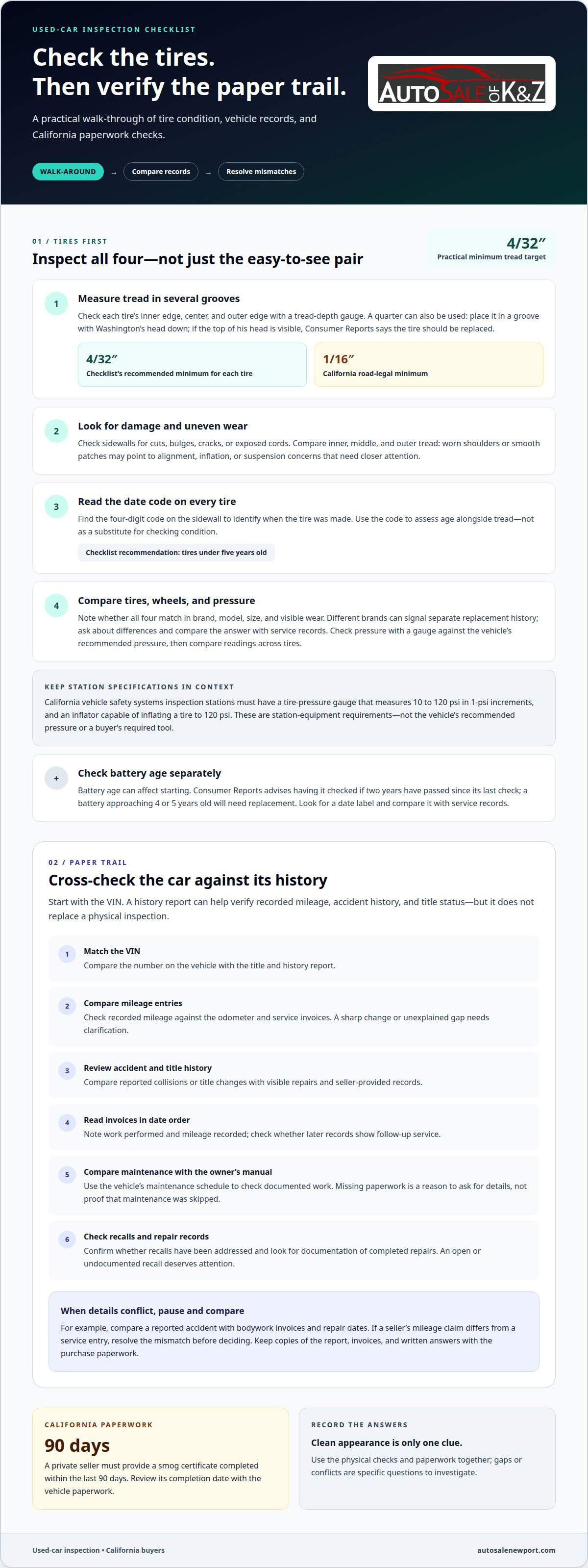
Start with all four tires, not just the pair facing the curb. A used car inspection checklist for California should distinguish a practical tread target from the legal minimum. Check wear across each tire’s inner edge, center, and outer edge. Uneven wear can point to alignment, inflation, or suspension concerns that need closer attention.
- Measure tread in several grooves. Use a tread-depth gauge, or place a quarter into a groove with Washington’s head down. If the top of his head is visible, Consumer Reports says the tire should be replaced. Treat 4/32 inch as the recommended minimum for each tire, while California’s road-legal minimum is 1/16 inch.
- Look for damage and uneven wear. Check sidewalls for cuts, bulges, cracks, or exposed cords. Compare the inner, middle, and outer tread; a worn shoulder or a smooth patch can reveal a problem that one center measurement misses.
- Read each tire’s date code. Find the four-digit code on the sidewall. It identifies when the tire was made, helping you assess age alongside tread. The checklist recommends tires under five years old, so verify the code on each tire rather than assuming they match.
- Compare all four tires and wheels. Note whether brands, models, sizes, and visible wear match. Different brands can signal separate replacement history, and mismatched tread may affect how evenly the car handles. Ask the dealer about differences and compare the answer with service records.
- Check pressure with a gauge. Use the vehicle’s recommended pressure as your reference, then compare readings across tires. California vehicle safety systems inspection stations must have a tire-pressure gauge measuring 10 to 120 pounds per square inch in 1-psi increments. That is a station-equipment requirement, not a buyer’s required tool.
- Note whether inflation equipment is available. California vehicle safety systems inspection stations must have a tire inflator capable of inflating a tire to 120 psi. For your inspection, focus on accurate pressure readings and visible tire condition; a station’s equipment specifications do not establish the car’s recommended pressure.
Battery age is a separate check, but it can affect a car’s ability to start. Consumer Reports advises having the battery checked if two years have passed since its last check. A battery approaching 4 or 5 years old will need replacement, according to Consumer Reports. Look for a battery date label, and compare it with any service record rather than guessing from appearance.
What California smog certification rules apply when buying a used car? A private seller must provide a smog certificate completed within the last 90 days. Review the certificate and its completion date with the vehicle paperwork.
Who is responsible for smog certification when a used car is sold in California? The private seller must provide the certificate completed within the last 90 days. Keep that document with the records you review before completing the purchase.
What California laws protect buyers of used cars from dealers versus private sellers? If a dealer can’t obtain financing at the promised rate, the deal is off and the dealer must return the buyer’s money, including any trade-in. The buyer doesn’t have to accept a higher rate or down payment. An “As Is” used car may leave the buyer responsible for repair costs if it breaks down.
Reviewing vehicle history reports and service records
Start with the vehicle identification number (VIN), then compare the history report and paperwork with the car. A report can help verify recorded mileage, accident history, and title status. It doesn’t replace a physical inspection, but gaps or conflicts give you specific questions to investigate before deciding.
- Match the VIN across documents. Compare the number on the vehicle with the title and history report so you’re reviewing records for the same car.
- Compare mileage entries. Check the report’s recorded mileage against the odometer and service invoices. A sharp change or unexplained gap needs clarification before purchase.
- Review accident and title history. Look for reported collisions or title status changes, then compare those entries with visible repairs and seller-provided records.
- Read service invoices in date order. Note the work performed, mileage recorded, and whether later records show follow-up service. A folder of invoices is more useful when dates and odometer readings form a consistent sequence.
- Compare maintenance with the owner’s manual. Use the vehicle’s manual to identify its maintenance schedule, then see whether service records document the listed work. Missing paperwork is a reason to ask for details, not proof by itself that maintenance was skipped.
- Check recall status and repair records. Confirm whether recalls have been addressed, and look for documentation of completed repairs. An open or undocumented recall deserves attention before you proceed.
Use the records together rather than treating a clean-looking report as a complete history. If the report lists an accident but invoices show bodywork, compare the repair dates and descriptions. If the seller’s mileage claim differs from a service entry, pause and resolve the mismatch. Keep copies of the report, invoices, and written answers with your purchase paperwork.
How do I check for flood damage, frame damage, or hidden repairs on a used car? Compare the history report with the car’s visible condition, service invoices, and repair descriptions. Look for signs that don’t match the documented work, such as inconsistent paint or uneven panel gaps. Have a mechanic assess any concerns that need a closer inspection.
Before buying a service contract, read its coverage, exclusions, and cancellation terms. In California, a buyer can cancel a service contract within 30 days for a full refund; after 30 days, the buyer receives only a portion back. Keep the contract and cancellation terms with your vehicle records.
Warranty coverage is separate from service records, so read the written warranty terms rather than assuming repairs are covered. If you’re also weighing what to do with your current vehicle, review vehicle trade-in services as part of that decision.
Checking fluids, battery, belts, hoses, and cold-start behavior
Ask to see the car before its first start of the day, while the engine is cold. Turn the key or press the start button, then listen for prolonged cranking, an uneven idle, or unusual knocking. Note warning lights at startup and whether they go out after the engine runs. A warm engine can hide cold-start symptoms, so record what happens before driving.
- Check engine oil. With the car parked level, inspect the dipstick if the vehicle has one. Note the oil’s level and appearance, and look for oily residue around the filler cap.
- Inspect coolant condition. Check the reservoir for its visible level and signs of discoloration. Bubbling in the radiator reservoir can indicate a possible blown head gasket, so treat it as a reason for further assessment.
- Look for fluid leaks. Check beneath the engine and around accessible components for fresh drips or wet residue. Identify the area and fluid appearance rather than guessing at the source.
- Examine belts and hoses. Look for cracked, frayed, swollen, or visibly damaged parts. Check accessible hose connections for staining or dampness that could suggest a leak.
- Review battery age and condition. Consumer Reports advises having the battery checked if two years have passed since its last check. A battery approaching 4 or 5 years old will need replacement, according to Consumer Reports.
Ask for the battery’s last test or replacement record, then compare it with any date label on the battery. Check that the terminals appear secure and free of heavy corrosion. A dashboard battery warning, slow cranking, or dimming lights during startup are useful observations to share with a mechanic. These clues alone don’t identify the cause, but they can help focus a charging-system check.
During startup, watch the instrument panel and note any warning light that stays on. Listen again once the engine settles at idle. Then check the exhaust for persistent smoke and the engine bay for fresh fluid movement or unusual odors. Don’t touch hot or moving components. Record what you observe instead.
Separate mechanical checks from convenience features. For example, test Bluetooth pairing with your phone after inspecting the engine, but don’t treat a working connection as evidence of engine health. If the cold start, fluid condition, or battery raises concerns, write down the exact symptom and get a repair assessment before deciding. “Slow cranking on first start” is more useful than a general impression.
Daylight inspection and mechanic assistance
Choose daylight for your walk-around, when paint differences and visible damage are easier to see. Park on level ground, then view each side from several angles. Look for mismatched paint, uneven panel gaps, dents, and cracked glass. Open and close the windows, doors, and trunk, noting anything that sticks or fails to operate.
Inspect the car inside and out before purchase, then involve a mechanic if your own inspection raises questions. A mechanic can assess issues beyond a surface walk-around, such as a noise, warning light, or uneven tire wear. This can be especially useful for a high-mileage vehicle or a luxury car, where mechanical concerns may not show during a brief look.
- Describe specific symptoms. Tell the mechanic when a noise occurs, such as during startup, braking, or a turn. Include dashboard warnings and any changes you noticed during a drive.
- Request a written report. Consumer Reports recommends asking for a report detailing the car’s condition, problems found, and repair costs. Written findings help you separate observed issues from assumptions.
- Review the shop’s credentials. A shop may carry the ASE seal if 75 percent of its employees are ASE-certified. ASE grants certificates to mechanics who pass exams in any of eight areas of expertise.
- Use daylight findings as a guide. Point out paint inconsistencies, glass damage, and panel gaps you noticed. This connects visible clues with the mechanic’s assessment rather than treating each observation separately.
How much does a pre-purchase inspection cost in California, and where can I get one? Arrange it with a mechanic or repair shop that can inspect the vehicle and provide written findings.
Before the appointment, prepare a short list of concerns and bring the vehicle history report and service records. If the report notes an accident and a daylight inspection reveals a paint mismatch, for example, ask the mechanic to assess that area. A clear request helps focus the inspection on the car’s condition.
Use the report to decide what needs follow-up before purchase. If it identifies a repair, compare the finding with the car’s service documents and ask what the issue affects. Keep the report with your purchase paperwork so you can refer to the exact observations and repair estimates later.
Checking exterior panels, paint, glass, lights, and tires
Inspect the exterior in daylight before buying, when reflections can reveal paint differences. Walk around the vehicle slowly, then view each panel from a low angle. Compare the gaps between the doors, hood, and trunk. A gap that changes width or a door that sits unevenly may point to prior bodywork. These clues don’t prove damage, but they show where to look more closely.
- Compare paint across adjacent panels. Look for differences in shade, texture, or gloss between a door and its neighboring fender. Check edges around handles and trim for overspray that may indicate repainting.
- Look over glass and the windshield screen. Scan for chips, cracks, clouding, and scratches in your line of sight. Check side windows for smooth operation, and inspect seals for gaps or damage.
- Test every exterior light. Switch on headlights, turn signals, and hazard lights, then ask someone to check the rear lamps. Verify that the third brake light works, along with the regular brake lights.
- Compare the four tires and wheels. Check whether all four match in brand and appearance. Consumer Reports advises asking why tires are from different brands. A car with fewer than 20,000 miles should probably still have its original tires, according to Consumer Reports.
- Read the tire date codes. Check the four-digit code on each sidewall and compare tire ages. The checklist recommends tires under five years old, so an older tire deserves attention even if its tread looks usable.
- Check body edges and trim. Look closely at bumpers, wheel arches, door edges, and molding for loose clips, fresh paint, or uneven alignment. Note each concern and photograph it for comparison with the vehicle records.
Use a consistent route around the car: front, passenger side, rear, then driver side. This makes differences easier to notice, such as a headlamp that appears newer or a panel that reflects light differently. Open the doors and trunk to inspect their edges and surrounding paint. Check that each closes without unusual resistance.
Finish by comparing what you see with the records and the seller’s explanation. A repainted door paired with a documented repair gives you context; an unexplained paint mismatch calls for closer inspection. Write down the location of each concern rather than relying on memory.
Ready to compare vehicles after completing your walk-around? Explore used-car options and apply the same careful exterior checks to each one.
Auto Sale Newport: Tesla Model 3
Auto Sale Newport can help you explore a pre-owned Tesla Model 3 after you’ve completed your inspection and considered the vehicle’s condition. If you’re comparing options, its selection also includes the Tesla Model Y, Toyota Prius, and Toyota Corolla. Use the checks in this guide to assess each vehicle’s tires, records, exterior, and overall condition, then weigh those findings against what matters most for your next car. A careful comparison can help you narrow your choices without rushing the decision. For a straightforward next step, contact Auto Sale Newport to discuss your used-car options.
Make Your Next Step With Confidence
A used car inspection checklist for California is most useful when it helps you set clear priorities. Before deciding, separate issues that affect safety or reliability from cosmetic flaws you can accept. Consider how each concern fits your budget, daily driving needs, and willingness to handle future repairs. This gives you a practical basis for comparing vehicles rather than relying on appearance or a quick impression.
If a finding remains unclear, pause and decide what information would resolve it. A written inspection report, a document you haven’t reviewed, or a specific explanation from the seller can help you make a considered choice. Keep your notes together so the reasons for your decision stay clear, even when comparing another vehicle later.
When you’re ready to explore your next used-car purchase, contact Auto Sale Newport to discuss your options. Take the time you need, ask practical questions, and move forward with confidence in the decision you’ve made.
Frequently Asked Questions
What should I check during a used car inspection in California?
Check whether the car’s condition matches its paperwork and how it behaves on the road. In California, note differences between the odometer, title, and history report, then record concerns with their exact location or symptom. For example, note whether a vibration starts while braking or continues at a steady speed. These details give you specific points to revisit before deciding.
How can I check a used car's vehicle history, title, and accident records in California?
Use the vehicle identification number to obtain a history report, then compare its mileage, title status, and accident entries with the vehicle and paperwork. Treat the report as one source, not a complete account of the car’s condition. If an accident entry conflicts with the seller’s explanation or repair documents, ask for a clear account and compare the dates and details before proceeding.
How do I verify a California used car's VIN and odometer reading?
Compare the VIN displayed on the vehicle with the number on its title and history report. Then compare the odometer reading with mileage entries in the service records and history report. Look for a sequence that makes sense over time. If a document lists lower mileage than a later entry, or the physical VIN differs, pause and resolve the mismatch before signing paperwork.
What should a mechanic inspect during a pre-purchase used car inspection?
Ask the mechanic to assess the engine, transmission, brakes, steering, suspension, tires, leaks, and visible signs of collision damage. Share your notes about startup noises, warning lights, or handling changes so the mechanic can focus on those symptoms. Request written findings describing the car’s condition, problems, and repair costs. You may arrange an independent third-party inspection at your expense, subject to dealership and vehicle availability.
What documents and fees should I check before buying a used car in California?
Review the title, purchase contract, history report, service documents, and any warranty or service-contract paperwork. For a private-party sale, California requires the seller to provide a smog certificate completed within the last 90 days. Read the contract’s itemized charges and compare them with the amount you agreed to pay. Verify every detail before signing; Auto Sale Newport disclaims responsibility for typographical, pricing, product-information, or advertising errors.
What are the biggest red flags when test-driving a used car?
Watch for persistent warning lights, unusual engine or brake noises, delayed gear changes, pulling, vibration, or inconsistent steering. Note when each symptom appears, such as during acceleration, braking, or turning, and describe it clearly. Test the car at different speeds and road conditions where safe. After the drive, check for new warning lights or fresh leaks.


